A teether ball gives a baby something soft and safe to chew. Little hands can grip the round shape with ease. The soft surface soothes sore gums during teething. Babies can roll it, squeeze it, and shake it. Parents can toss it in the diaper bag for trips out.
A ball teether is easy for small hands to hold. A teething ball toy gives a baby something safe to chew on the go. Soft silicone feels gentle on new teeth. Bright colors and fun textures keep a baby busy. This guide lists ten picks that parents trust for teething babies.
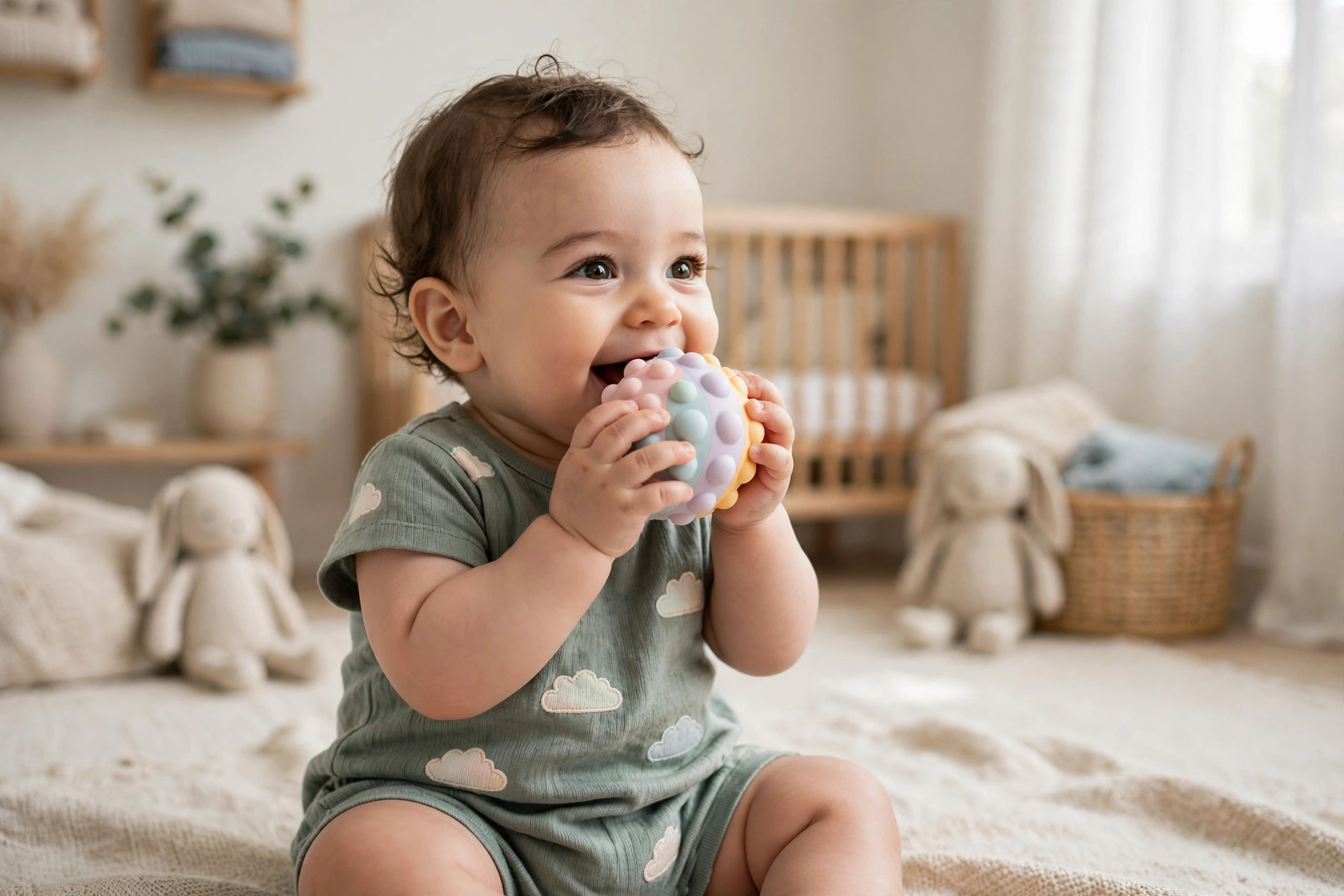
A happy baby chewing a soft colorful silicone ball teether in a bright nursery.
How to Choose a Teether Ball in 30 Seconds
Use this quick list first. It saves time, keeps your choice simple, and helps you pick with care:
Pick a ball wider than your baby mouth so it stays safe.
A soft silicone ball is the best first teether for most babies.
Bumps and textures give sore gums more to chew.
Rinse the ball after each use and check it for wear.
Top 10 Teether Picks Overview
In Depth Teether Reviews
Teether Ball Safety Tips Every Parent Should Know
Check the ball each day for cracks and tears. Throw it away if any piece feels loose. Pick a size that a baby cannot fit fully in the mouth. Soft silicone is kind to new teeth. Keep the ball clean so germs stay away.
Watch a baby during play time. Never tie a teether to a crib rail. Store the ball in a clean dry place. Replace it at the first sign of wear. A safe ball gives parents peace of mind.
How to Clean a Teether Ball
Rinse the ball with warm water after each use. Use a drop of mild soap for a deep clean. Scrub the grooves with a soft brush. Rinse well so no soap stays on the ball. Let it air dry on a clean rack.
Some balls can go in the dishwasher on the top rack. Check the label before you wash it that way. Some parents boil silicone balls for a deep clean. Dry each ball fully before you store it. Clean balls are safe balls for little mouths.
When to Replace a Teething Ball
Teething balls wear out with daily chewing. Look for bite marks and thin spots. A ball that feels sticky needs to go. Faded colors can mean the surface is worn. Most balls last a few months of hard use.
Buy a new ball when the old one looks tired. Keep a spare ball in the diaper bag. A fresh ball is safer for sore gums. Check the ball each week for damage. Small cracks can hide germs inside.
How to Choose the Right Size for Small Hands
A good ball fits in a baby's palm. Too big is hard to hold and too small is unsafe. Look for a ball that is wider than a baby's mouth. Light balls are best for young babies. Try a few sizes to find the right fit.
Soft balls suit babies who are just starting to teeth. Firmer balls suit older babies with more teeth. Textured balls give sore gums more to chew. Pick colors that catch a baby's eye. The right size makes play time safe and fun.
What to Pack in the Diaper Bag
Pack one ball for the car and one for the bag. A small wet bag keeps a used ball apart from clean things. Add a soft cloth to wipe the ball clean. A spare ball helps when one gets lost. Keep the bag light so it is easy to carry.
Pack the ball where you can reach it fast. A clip can keep it from falling on the floor. Check the bag each night and restock it. Clean balls go in one pocket and dirty ones in another. A packed bag makes trips out much easier.
What NOT to Buy: Common Costly Mistakes
A teether ball list can go wrong in small ways. Check the size first and pick soft balls with no small parts. Keep the ball clean and check it for wear.
Balls that are too small
A ball that is too small can fit fully in a baby mouth. Pick a ball that is wider than the mouth so it stays safe.
Teethers with small parts
Small parts can break off and choke a baby. Pick one solid ball with no beads or rings that come loose.
Hard plastic balls
Hard plastic hurts sore gums and new teeth. Soft silicone or rubber feels kind on a baby mouth.
Used teethers from strangers
A used teether can hide cracks and germs inside. Buy new so you know it is clean and safe.
Frequently Asked Questions About Teether Balls
Final Words
The right ball makes teething a little easier for everyone. Start with a soft ball that is easy to hold. Add a sensory ball when a baby wants more to explore. Keep the ball clean and check it often. A happy baby means a calmer day for parents.
Pick one ball today and see how your baby likes it. A simple ball is often the best first teether. Watch what your baby reaches for most. That tells you which style to buy next. Small steps add up to a calmer teething time.